
Could the key to better treatments for chronic conditions such as diabetes and inflammatory bowel disease be found in our own backyards?
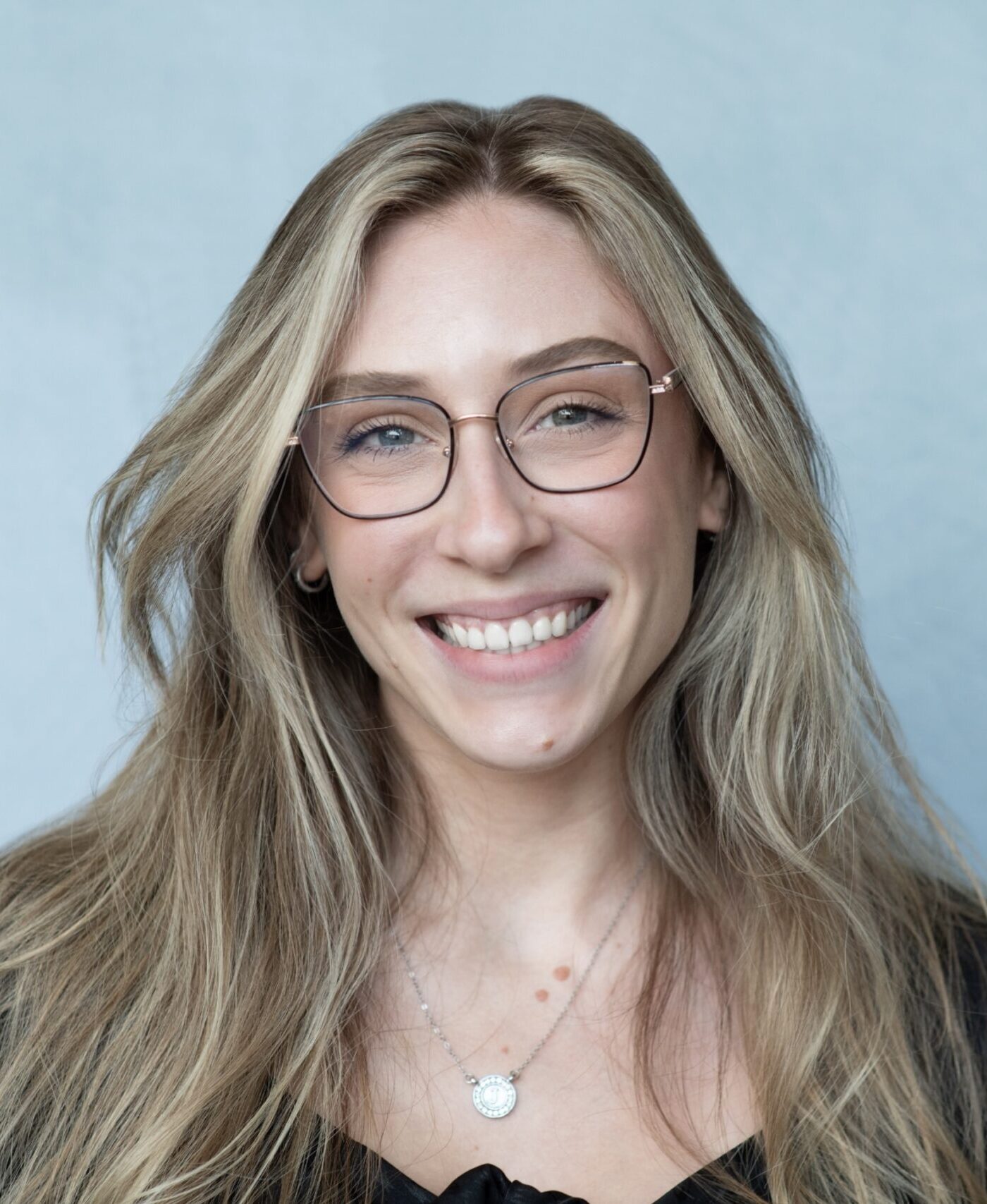
Dr. Nick Burton, an assistant professor in Van Andel Institute’s Department of Metabolism and Nutritional Programming, explores how the microbiome — a community of trillions of microbes that reside in gut — can promote health or, when things go wrong, fuel disease. His research aims to reveal why some people with genetic risk are protected from disease while others are affected.
As part of the Van Andel Institute Public Lecture Series, Burton explained how microbes — including those in soil, leaf litter and riverbanks — may reveal biological mechanisms that shape disease risk and therapy response.
Watch the lecture below:
Video transcript
Maranda:
Good afternoon and welcome. I am so excited that you have chosen to join us today for the Van Andel Institute Public Lecture Series. We have an exciting conversation for you today. We’re gonna answer some big questions, for instance, people who should have genetic diseases and don’t. Why is that? What makes them unique and special? And what can we learn about that and harness it to better treat those diseases? We’ll also take a look at what might be in your very own backyard that could help provide future treatments. I am so excited because today we have Dr. Nick Burton, who is with Van Andel Institute joining us to lead us in this conversation. Welcome Dr. Burton.
Dr. Nick Burton:
All right, well, thank you for that introduction, uh, and hopefully we’ll answer all of those questions or as much as I can, uh, today. So, as Maranda mentioned, I, uh, am interested in, uh, people who should have genetic disease but don’t. And so I’m gonna lead as an example of what I’m talking about here with a story that was in the New York Times just a couple of weeks ago. So some people on this call might have read it. And this is the story of Doug Whitney. Uh, Doug Whitney is an individual who comes from a family who has this variant that should develop Alzheimer’s disease. His mother, his brother, nine out of 13 siblings, uh, and many members of his family going back generations have developed Alzheimer’s in their forties or fifties, uh, and succumbed to disease. But Doug Whitney is 76 and shows essentially no signs of Alzheimer’s disease.
Dr. Nick Burton:
To date, he’s the only known person to have this variant but not have Alzheimer’s disease. And so this came out this year in a Nature Medicine study, uh, and they profiled Doug Whitney. They’ve been studying him for years, trying to figure out what protects him from this disease. But the answer is still unknown. And the New York Times article ends with this quote that the puzzle that protects Doug Whitney, uh, is too valuable not to answer. I can’t quite see the exact quote here. Um, but this I think is really the thing that I’m most interested in. I’m fascinated by these stories because you’ll see a story like this every couple of months almost. Um, this is the story of Doug Whitney, and so it’s in the New York Times ’cause Alzheimer’s a very prevalent disease. But you you also see examples of this in other contexts. So, um, last year there was a small study in France.
Dr. Nick Burton:
So this is a hospital in Dijon, France, and there’s a cluster of five university excellence hospitals there. And they predominantly take in children with genetic diseases and they, you know, they’ll sequence their genome and try and figure out, you know, what exactly is causing the symptoms these children have. And then they hope that they can, by assigning it to a specific syndrome, give them better, you know, treatment or care, uh, for that pathology. And this is pretty much standard of care. But what this hospital did is they also decided to sequence the parents. And this was a bit non-traditional because for all of the ones that have been identified that they were working on, there are no examples of anyone who has these variants and doesn’t have the disease. So they’re usually thought to be, uh, essentially completely penetrant and they just sort of arise by chance, but the parents shouldn’t have them.
Dr. Nick Burton:
And what they found is 12 different cases spanning, uh, at least nine severe, uh, neurodevelopmental syndromes where one of the parents would have the exact same variant they passed it on, but the parent is asymptomatic. They have absolutely no signs of disease. And in nine of 12 of the cases, they were the first ever individual to have a, this, one of these variants, but not have the disease. So a lot like Doug Whitney, right, where they have a, their genome looks like it should have a genetic disease, but they are otherwise asymptomatic. And this is true across many, many pathologies. Uh, a few labs because these days we’ve started to study this at scale or a couple of labs have tried to do this. You don’t have to know anything about these exact studies that you see here. But basically we have a lot of human genomes these days, uh, including genomes from otherwise healthy individuals.
Dr. Nick Burton:
And what people are starting to notice is that approximately, there are different estimates ranging from one in 20 up to one in 20, uh, to a little bit more rare. But it’s not uncommon to find individuals who should have a, a, a given genetic disorder, but don’t they present us healthy anyway. And this is relatively common. And so my lab is interested in why. Can we figure out what’s going on here to try and develop better treatments for these currently untreatable diseases? Uh, and so I’m just gonna keep going on here. These are basically broken down. If I go back to that blue slide as what could be going on. And there’s really three theories, right? One is, uh, for people who definitely have this mutation where they validate all the artificial artifacts, it’s genetic suppression, incomplete penetrance, and the environment. And I’m gonna walk through what those are ’cause they sound like very technical terms, uh, and very, they they are.
Dr. Nick Burton:
But I think we can explain them in a way that will make sense to everyone. And so first off is genetic suppression. And so the first thing I’d like to highlight with genetic suppression is a, a model of like an apartment complex. Like if you think of an apartment complex and the plans that make up the apartment complex are your DNA, if you have a change in your DNA that breaks something like, let’s say it breaks the fire alarms in a way that sets off the sprinklers, even though there’s no fire, right? This is an immediate problem. This is, this outcome is bad ’cause you’re flooding the building, right? So that’s a problem. That’s in your, let’s say a change in DNA causes the fire alarms to go off and now you’re flooding.
Dr. Nick Burton:
But let’s say you add a second uh, variant, right? If I go here, my slides over, there we go. Let’s say you add two changes in the DNA one that should set off the sprinklers, but another one that blocks the water pipes leading to the sprinklers. Now you’ve broken two things. You both have the fire alarm going or trying to set off the sprinklers, but also no water coming to the sprinklers from the perspective of your apartment complex. You do have two broken things, but it’s kind of fine, right? As long as there’s no fire, uh, the apartment complex is fine. That is genetic suppression. Basically, things are pretty much fine. Uh, even though you have two breaks, you can have this in a genome where one thing breaks, it should cause pathology. But you break another thing and things kind of balance out. And this is actually how a lot of drugs sort of in principle work.
Dr. Nick Burton:
Um, for example, I have injured my shoulder and you know, I have a shoulder and it has an injury and that’s bad. That’s not a DNA problem. It’s just like, I have a shoulder injury and it hurts, uh, and I’ll take ibuprofen. And now that ibuprofen actually just sort of inhibits the inflammatory response I, and then feel fine, right? And so I feel fine, but I still have an injured shoulder and I’ve blocked part of my immune system. But it’s like more or less fine, uh, because the system is gonna be fine. And so that’s kind of the principle of a lot of drugs and genetic suppression is that you can turn other things off to make the system fine. The problem’s still there, but it doesn’t cause any bigger problems. And so genetic suppression is one example. Maybe these people have another variation in their genome that protects them from whatever that first variation was.
Dr. Nick Burton:
The next example is incomplete penetrance. Incomplete penetrance is usually pretty hard ’cause it’s very hand wavy, uh, even among scientists. But let’s picture something very stochastic. Like if you had a DNA change that instead of setting off the fire alarms, it’s like in the foundation. And so the building just like falls down, right? That’s a very chaotic process. Uh, everything sort of just falls down. Uh, and that’s obviously bad. But when buildings fall down, like occasionally, they’ll fall down in such a way that you’ll get a pocket where there’s like a room that’s unaffected. Um, this happens. It’s stochastic. There’s no real cause for it. It’s just chance, right? It’s just lucky chance. And stochastic processes in biology might lead to some individuals just ultimately not getting disease. ’cause there’s a bunch of noise in the system. That’s the best way to explain incomplete penetrance without going too deep into the details, is that it’s just noisy.
Dr. Nick Burton:
And so some individuals are accidentally healthy. This would be the worst outcome for us because there’s no way to make that happen, uh, in a given individual. But we don’t actually think that that’s what’s going on here. Um, and so the third example is the environment. And this is often pretty hand wavy too, uh, because it could be anything, right? The environment is anything. But what my lab posits is that most humans live in environments that on many scales are similar. Like the oxygen concentration we breathe is more or less the same, right? We all live on earth. Uh, but what is variable is your diet and, and a microbiome. This actually varies quite a bit from person to person. And I’m gonna go into a little bit more detail on this, but that, those differences in diet and microbiome sometimes might explain some of these cases where people become more or less, uh, healthy based on whatever interaction with their genetics that they have.
Dr. Nick Burton:
So your genetics interacts with its environment and it can give rise to different outcomes. So maybe some of it’s environmental, this is the most exciting, uh, aspect of it for me from a therapeutic standpoint because the environment is a place where we can intervene, right? We can do something about that for patients with a given genetic background. Uh, and so I’m gonna go a little bit more in detail on this. So what is diet? When most people hear diet, uh, in media or in texts or in books, they’re thinking of something like these two pictures on the left, right? Diet is like a pile of foods that we associate with health or a pile of foods that we don’t associate with health. That’s for the purpose of this talk, not what I’m talking about. Um, because from my perspective, uh, or from the perspective of biology of what’s gonna matter is the molecules.
Dr. Nick Burton:
So the individual molecules, from the standpoint of your gut, that’s what it is picking up and taking for food. The molecules that make up what you’re seeing there is healthy and unhealthy. Lots of them are gonna be the same, right? It’s just like proteins and d you know, nucleic acids, like just basic biological building blocks. Uh, but there also are differences. Um, also diet is not one thing in the sense of like, let’s say I have two pieces of celery. We think celery is a veg, you know, a vegetable, it’s a diet. But if you grow celery in, you know, two different continents based on the soil compositions and stuff there, they might not actually be the same composition of molecules. Those might not even be the same at that level. Uh, so what I’m talking about for the purpose of this talk is can I get to the individual molecules that are present in foods that might protect people from a given genetic disorder, right?
Dr. Nick Burton:
Uh, so really from the standpoint we’re talking about is diet is probably millions if not billions of different molecules, most of which have no impact, but some might, right? And then when I talk about microbiome, so I can’t see the details of these slides to read them to you right now, but basically your microbiome, uh, people might have read about this. You see it online every now and then. Diet and microbiome are linked to any disease that you could Google, right? If you Google it and diet or microbiome, you’ll find someone who’s claiming that that matters. Uh, but usually it’s not clear what exactly is going on. It’s, it’s very correlative and they’re not very sure. Um, the reason for this is your microbiome starting, uh, basically with your mouth, I guess through your stomach and digestive tract is comprised of many, if not trillions of different bacteria, right?
Dr. Nick Burton:
Uh, or not different bacteria, but trillions of bacteria that comprise at least 500 species. Uh, these bacteria are actually mostly healthy, right? Like you need them there. It would be worse off if they weren’t there. Um, and there’s different types of species and different parts of your intestines, uh, but there’s a lot of them and they’re generally beneficial, right? And you want good ones there, but there’s many, many different ones. And what microbiome I have and what anyone on this call have are probably different, um, for reasons that might be stochastic or genetic. Uh, just what bacteria you get by chance might change and they might change over the course of your own life, right? So what I’m talking about when I talk about microbiome though, isn’t even the collection of bacteria. It’s the fact that they produce what is, by most scientific studies considered an uncountable number of molecules, right?
Dr. Nick Burton:
Ones that probably wouldn’t even normally be in your diet. They also compete with you to eat the food you intake, and then they make their own set of molecules from the food you’re eating, right? Those molecules are again, billions if not trillions of potential molecules. 99.9% of them just don’t matter from the standpoint of your health or your gut. But some of them could in theory explain some of what makes one individual healthier and one not. Uh, and so what my lab hypothesizes, the major overarching hypothesis of my lab to give it a very simple schematic is that for any given genetic background, there’ll be interactions of your genetics with your diet and microbiome. And those millions or billions or trillions of molecules that could in principle lead to more healthy or less healthy outcomes. And that might be common for certain genetic backgrounds. And it might be, uh, uncommon for things like Doug Whitney, where he has a very rare example of something that modifies it, right?
Dr. Nick Burton:
This is at least our hypothesis right now. There’s no mechanistic data. I haven’t shown any, uh, and I don’t think it’s out there, but this is my lab’s hypothesis, right? And so what we hope though is that if we could find the specific molecules that are present in a microbiome or diet that protect against disease, then we could utilize that to produce what I’m gonna call Doug Whitney, like outcomes, right? Where we know someone should develop a disease, but we give them a specific thing that’s gonna protect them against that, right? That is, uh, the dream. And there’s some evidence that this could be true. And so I’m gonna give a scientific study. You don’t have to read anything on the left there. It’s, it’s just the title of this study. But really what this study was about is an example of a thing you’re probably not gonna associate with diet or microbiome.
Dr. Nick Burton:
And this is ALS, right? So ALS is a neurodegenerative disorder. It’s very, you know, commonly studied here at VAI, it’s one of our focus topics. And there’s a gene called C9orf72 that is the major genetic cause of ALS in humans. And there was a model of this made, uh, in the lab and they made it at Harvard and they showed that, look, we have this model of ALS and then they shipped it across the river to the place called the Broad, which is at MIT. It’s only about five, six miles away. Uh, they rederive the model and then none of ’em got sick. And they’re like, uh, I’m not sure. You know, is this a reproducibility issue? Right? And I think people hear this in the news right now, reproducibility in science ’cause here you have two labs and they have one says this has ALS and we can use it.
Dr. Nick Burton:
Another lab says, there’s nothing wrong with these animals at all, like, there’s nothing wrong with them. Uh, and what they did is they followed up on this and they studied it for a couple of years. And what they realized is that if you took the microbiome out of one mouse and gave it to the other mouse, you could produce either outcome. You could actually completely protect them from a currently untreatable disease based on switching, uh, or eliminating their microbiome, right? And they highlight here in the text, in the discussion, I like to highlight this, uh, because it was so surprising to them that in one condition you essentially had highly penetrant, uh, neurodegenerative symptoms and another, they were essentially absent. Um, and that was shocking, right? That the microbiome could have that big of an effect. And you don’t see it in normal mice. You saw it only in this genetic model that otherwise, uh, you wouldn’t have noticed, right?
Dr. Nick Burton:
So in that context is where this was revealed. And so my lab’s interested in this and what we’re really interested in, sorry, I don’t want to jump too far ahead with these images, is the challenge is one, right? Challenge one is we assume that this is due to some molecule that’s protective. And how do you find those, right? I just told you about how a diet is millions or trillions of molecules. Your microbiome is an uncountable number of additional molecules. And we assume that it’s probably like one or a small, small number of them that’s actually mediating any protection. And so how do you find them? Right? This, this is actually the real challenge. Uh, you’ll note that I just told you also about an ALS model. We still don’t have any treatments for ALS. It’s not like we made this discovery and now we’re like, well, we’ll just modify a microbiome and suddenly be able to treat ALS.
Dr. Nick Burton:
And the reason for this is because even in that study, you don’t know the species of bacteria. You don’t know, like you don’t know what molecules it’s making. Uh, so you have an unknown mechanism of action with an unknown molecule, and it’s very hard to turn that into a therapeutic, right? You just basically don’t know what’s going on. And so what my lab turns to is a very famous study at the time, uh, but maybe not so well known now, and it’s a study that used backyard soil microbes to transform human health. And so on the left you’ll see a picture of a guy named Selman Waksman. Uh, Selman Waksman is usually not known even when I present this to scientists, even though he won a 1952 Nobel Prize in medicine. But he’s famous in a field that most people know the discovery by a man named Alexander Fleming.
Dr. Nick Burton:
And that was the discovery of antibiotics, right? So antibiotics were discovered a bit accidentally, right? Where bread mold that grew on a plate, uh, looked like it produced this new antibiotic, uh, that protect against antibiotic growth or bacterial growth. And, and Alexander Fleming sort of accidentally ushers in the age of antibiotics which transformed human health, maybe one of, if not the most important discoveries in the history of biomedical health is antibiotics. And what Selman Waksman did was actually only seven years later, he made the hypothesis that this rare finding, this accidental thing, not unlike an accidental Doug Whitney discovery, uh, is not uncommon. Basically, that this seemingly rare result he thought was actually probably common. And the bacteria might make lots of small molecules that are bioactive and could be used as antibiotics. And the most likely place for them was gonna be in backyard soil.
Dr. Nick Burton:
He was a soil microbiologist at Rutgers. And so he builts what is now called the Waksman Platform. And you can see a little diagram of it, uh, at the top here. But basically he just collected dirt, uh, and grew the bacteria up and screened them in a high throughput approach using technologies only available in the 1940s, right? So nothing very complicated here. Uh, and he looked for antibiotics. And from this, he ushers in what’s now known as the golden age of antibiotics, either his lab or labs using this platform from the 1940s to the 1960s, discovered every class of antibiotics we still use in the clinic today except for two, uh, that were discovered later. Uh, basically transforming all of humanity. He wins the 1952 Nobel Prize for this Waksman Platform. Uh, nominally it’s for streptomycin, but this platform discovers almost all of the antibiotics that we still use today.
Dr. Nick Burton:
And so the most audacious goal of my lab, if I, um, to posit this, is we think bacteria also make lots of other molecules that are, that matter for biology. His platform could only find molecules from soil microbes that killed pathogens, right? Other bacteria, right? And that is great, but we think that there’s also molecules that bacteria make ’cause it’s the only way they can interact with their environment that target animals that sort of modify animal or eukaryotic physiologies that’s known. And those would never have come out of this. But we wanna build a platform that can find those. ’cause we think those might be, uh, mediating who gets healthier, who doesn’t in certain contexts of genetic disease. So that’s our goal. Uh, but how are we gonna find that? Uh, to do that we need to have some high throughput system, not unlike Selman Waksman.
Dr. Nick Burton:
So we need an an animal model that we can grow at scales of millions, uh, or even, you know, hundreds of millions of animals. And this is where we turn to a really well-studied, uh, microscopic worm. You can’t actually even see this with your eye, but it’s all over the globe. It’s called C. elegans. And it’s been studied for 40 years plus now it’s been studies of this microscopic nematode. One of the best studied in in biomedical research, underlie at least three different Nobel prizes in medicine at this point. Lots of labs across the world study this nematode because it’s got a lot of cool tricks about it. And my lab uses it too. And we think it’s particularly useful here because we can grow lots and lots of these. They’re not much bigger than the bacteria ultimately, uh, they eat bacteria as their diet.
Dr. Nick Burton:
Uh, they’re smaller than you can see with your eye and you can grow them germ free. Basically. You can get rid of all bacteria around them by collecting their eggs. Their eggs are sterile. And then you can use this, and I’m not gonna walk you through all of the platform, I will a little bit in the end, but what we built is basically a platform that looks a lot like the Waksman Platform in the sense that you collect soil microbes, you array them into these plates, not unlike what he did. But we’re gonna instead use this new technology called CRISPR, uh, which people might have heard of CRISPR’s in the news these days. Uh, it also was a recent Nobel Prize, but you can modify the genome of these little microscopic animals and create DNA variants that are the exact same ones found in human patients.
Dr. Nick Burton:
So we take a human patient, we say they have this, you know, variant and it’s causing this pathology. We’re gonna put that exact same variation into this nematode, right? And it will probably cause something some similar analogous, but then we’re gonna screen it at scale for a microbe that can protect it. ’cause we think those microbes exist. So that’s what our goal is, uh, and that to put it back in the context I just showed you in the human. So just take out the humans and put in the worms. We think this is universal across biology, that for any given genetic background, it’ll interact with a diet and microbiome. And for, for C. elegans, that’s the same thing, right? They eat bacteria and those bacteria go on to make up both their diet and microbiome. And those interactions between genetics and the diet microbiome could produce more healthy or less healthy outcomes.
Dr. Nick Burton:
And this is what it looks like for a, a worm. Uh, and, and if this is true, then we can go after with this platform, individual molecules. And so I’ll walk you through, uh, a day in the life of my lab, uh, when we started this project. And so what you’re looking at here is a compost bin in Rockford. So this is not far away. This is the backyard of, uh, my techs, uh, father, uh, it is a compost bin, right? Anyone has these compost bins and we collect some of those, right? And then we grow ’em up as bacteria, uh, right? And so we get a bunch of bacteria from a compost pin. We then, uh, need to make a model of a given pathology in C. elegans, right? And so here’s an example where we took a juvenile onset Parkinson’s disease. Like I said, VAI is very interested in neurodegenerative disorders.
Dr. Nick Burton:
And so this is a gene that in humans causes a, a juvenile onset form of Parkinson’s. Uh, there are no known treatments for this. And we basically make the exact same change in DNA in C. elegans. And I don’t think you need to know much about C. elegans to look at these two pictures. On the left, you will see C. elegans as they normally grow. This is their lab diet. These are a bunch of healthy adult animals. And and you’ll see on the right that when they have this particular variation that in certain contexts, uh, they are not the left, they’re not the picture on the left, right? They don’t look so good. Uh, actually they sort of stop developing shortly after, uh, hatching, right? And so this is from the standpoint, uh, of the worm kind of analogous, something’s broken on the molecular scale.
Dr. Nick Burton:
That’s the same as what we find in human patients. And so then we run it through our platform, right? We’re like, are there any bacteria in the backyard that can make this, uh, animal healthier, that could produce a Doug Whitney like outcome? And here’s an example, right? So here is a pseudomona species. And I think even if you don’t know much about worms, you can kind of appreciate that this has the same genetics as that picture in the middle, right? They are DNA wise, identical, uh, they’re siblings of each other, but in one microbial context, they’re very healthy and can’t make it to adulthood. And another microbial context, they are more or less, uh, fine, right? They’re like not a hundred percent, uh, as healthy as wild type, but they make it to adulthood. They live normal lives, uh, they reproduce and it’s more or less fine showing I think how dramatic the effects of a dietary ’cause that’s also their diet or microbiome we don’t really know, right?
Dr. Nick Burton:
Uh, can have, and this is just one pathology, right? But our hypothesis is that this is common, right? So here’s another example. This is a variant in a mitochondrial fatty acid oxidation disorder. You don’t need to know much about it, but it’s commonly found in Japan. And in this context, we actually knew that variants in this gene sometimes result in very early, uh, lethality, right? And in children under three, and we have no way to prevent this. But in other humans, they’ll have the same variant and live into their sixties with only mild pathologies. And so we knew that this doesn’t make a lot of sense. So maybe this is one that might have this. And we here are, uh, 12 different bacteria. And you can see that actually we engineered the exact same variations. A a specific change in one protein is Y to D, which you don’t need to know much about.
Dr. Nick Burton:
Um, we made the exact same thing in a worm and in some bacterial context there very unhealthy and, and also show an early lethality. But in other contexts they’re actually completely fine. And this gives an example, uh, of the type of thing we’re seeing. Here’s a third one. This is the last one I’m gonna show. We now have like five of these different, uh, models. This is insulin receptor. The one possible, uh, molecular biology gene that most people will have heard of is insulin. Uh, this is the insulin receptor. It’s a genetic model of type A insulin resistance. In C. elegans, they enter the state of arrested development called dour when they lose the insulin receptor. But here’s a bacillus species that’s also in the backyard where they grow up to adulthood semi fine. And so we think that this is evidence that this type of phenomena is common.
Dr. Nick Burton:
That we have many different genetic models that have no, well other than insulin resistance, where there is actually quite good treatments out there these days with ozempic and things, but most of ’em, they have no known treatments for these pathologies. And we put them in different environmental contexts, different dietary contexts, and we can find some that essentially, uh, give rise to healthy animals. And so the question two, and I’m not gonna go as deep into this, is, alright, well you have a bacteria, but you just told me they make an unending number of molecules. How are you gonna find the molecule? Like, you can’t just like give humans this bacteria. And that’s a great question, right? I mentioned this that we still don’t have any treatments for ALS because if you don’t know the mechanism, uh, or the molecules that cause it, you can’t get a therapeutic.
Dr. Nick Burton:
And that’s sort of what plagues microbiome studies today. But the benefit of this system is that the diet and microbiome here has its own genome, right? It’s a bacteria and therefore it’s modifiable. And we can individually delete gene by gene in the bacteria and ask what in that bacteria is actually doing this? Uh, and so you can modify individual genes. And here’s an example. We run these screens in reverse and we look for mutant bacteria that essentially can’t cure our model anymore. And here’s an example of, uh, several genes in what’s called the polyamory synthesis pathway, which you can see below. It doesn’t really matter. They make metabolites little small molecules that you can see below. And when you get rid of one of them, now the animals go the other way, right? So that bacterial gene, if you change it, uh, the animals actually go the other direction.
Dr. Nick Burton:
So now we’re down to an individual gene in a bacteria that when that gene changes, it changes its metabolites and that impacts the animal that eats it, right? So now we have a, an individual molecule. And in this particular case, ’cause I don’t want to go too deep into the science, we actually knew that the pathway you see below there mustn’t be correct. It actually didn’t make any sense with the genetics. And we spent the last two years working on this, and I’m gonna skip to the end, uh, of the whole study, which is that we found by studying this gene in a bacteria that mediates an effect on an animal, this molecule that you see on the left, which is called N(1)-aminopropylagmatine. It’s a non-canonical poly amine that’s not normally found, uh, in any context. But we found that when bacteria make this, particularly if you delete that one gene, they’ll make a lot of this.
Dr. Nick Burton:
It actually inhibits mitochondrial function in the animals and causes them to stop growing. This is gonna come out, uh, in nature comms in the next couple of weeks. And this is particularly exciting to us. ’cause here it proves that we can use our platform to find specific molecules that mediate an effect on animals. But it just so happened that a couple years ago, people realized that deleting that gene and bacteria for reasons unknown was contributing to severe inflammatory bowel disease. And it wasn’t exactly clear why deleting that gene and bacteria caused this. And what we think our study shows is that actually those bacteria are making this presumed previously unknown molecule and that it’s actually hurting the intestines. Uh, this, this is a study that was done and we now think that this actually might happen in some people where their microbiome has lost that gene.
Dr. Nick Burton:
’cause bacteria, there’s about a million or more mutations in the bacteria in your genome per day, right? Bacteria dividing all the time. Sometimes that goes wrong. Uh, and that maybe there are bacteria that produce this molecule. And it actually contributes to IBD in humans. So we’re collaborating with U Mich West hospitals, this is Dr. Michelle Muza-Moons, uh, to ask these questions of, you know, things like, can we find this molecule actually in patients with IBD and if so, we actually know how to go stop it. Um, and so these are the types of things that come out of our studies when we can get individual molecules, we can make specific hypotheses for do those molecules, uh, contribute cause disease, and can we block them if they’re having a toxic effect? Or can we isolate ’em and give them to people, uh, if they’re protective? And so where my lab’s going with this is we have some other molecules that seem to be active and mediate some of these effects.
Dr. Nick Burton:
Uh, we have other conditions that we don’t have molecules for yet, but we’re hot on the trail of studying. Uh, and we hope to go forward with that. The last slide I have, uh, ’cause this is really ongoing research for me, is I just wanna step back from sort of this technical science stuff and say that this project may or may not sound complicated to you. I don’t know. Um, but it’s, it’s not, and I don’t want it to seem like science is this hard thing that only a handful of people do, right? And so my lab, uh, we work with Lowell High School for the last three years to show that even high school students, I think everything, all these pictures I’ve showed you, anyone can look at these worms and see differences and backyard bacteria are everywhere. For the last three years, uh, students at Lowell have been going out into their backyards collecting bacteria and trying to do this in a high school with just the equipment, uh, that’s present in a high school.
Dr. Nick Burton:
I told you that we, we model our science actually on this phenomenal 1940s studies. Most high schools have all the things that you had in a lab in the 1940s. Uh, and I think they can do it. It’s, it’s taken a little adapting and we’re working on it. But I, I’m really passionate about this because when I was a student, science was kind of boring in the laboratory, right? You’re just reproducing studies from a hundred years ago and you could either be wrong and fail at it or just reproduce something we already know. And that’s not why most of us do science. Most of us do it because we could discover something. I wanna bring that experience, uh, to the high school and they might not discover anything. They might, but they could, right? And, and so we think that this is doable, uh, not just by us, but that this is a platform that anyone could take at least with a modern lab, uh, and build on for the genetic diseases they’re interested in.
Dr. Nick Burton:
So we’re really trying to develop it, uh, for that lines and try to build it into curriculum to show students how science happens. That it’s not just for a handful of people that anyone can do this given a platform, uh, even even people who aren’t even 18 yet, right? So, uh, with that, I’d like to, to thank my lab. Uh, this is our funding sources. The NIH is critical to doing this research. I am a consultant for Novonesis, uh, the Pew organization. Uh, and with that, uh, my lab, who you can see there who do all of the phenomenal work. And with that, I’m happy to take any questions.
Maranda:
Well, Dr. Burton, thank you. Thank you, thank you for doing this. This is fascinating work. For those of you joining us, if you have a question that you would really love to ask, um, I think Dr. Burton is open to just about any questions. So go for it,. Um, go ahead and use the email that you received with your reminder from [email protected] and submit that question. And we will try to get to as many of those as we can. So feel free to go ahead and just email those questions directly to Allison and she will relay those to us. I wanna get started. Um, you are passionate about this work and it’s over my head, but at the same time, I feel like I learned something today. What drives you to do the work you do?
Dr. Nick Burton:
I mean, I, I am fascinated, um, by treating and developing new treatments for disease. The the reality though is like, why did I become a scientist? If you wanna say like, what drives you? Um, I actually grew up, this is a random story on a farm. Uh, growing up, working on a farm in rural Wisconsin, I had no interactions with scientists. Uh, my parents didn’t go to college. We didn’t see, I didn’t know what that was like, right? But I do know that when I was 16, there was a high voltage power lines behind the farm and they grounded and threw a phenomenal called stray voltage, which I’d never heard of. Electrical shocks were coming up out of the ground and, and shocking the cows. And this was a big problem for me because 25% of the herd got mastitis, uh, infections. There were birth defect.
Dr. Nick Burton:
Like it was a big problem. And it was such a big problem that there was lawsuits over it at the time that was hitting other farms. And scientists from UW Madison actually came out to try and figure out what was going on. And I don’t know what happened. They probably didn’t wanna talk to some 16-year-old. Uh, but I asked them, you know, what was, did they find anything? And they told me that electric shock was bad for cows. And I was like, well, that is definitely easier than what I’m doing. ’cause I could definitely have made that conclusion. And I was like, this seems like a lot easier job than farming. Uh, and <laugh> at the time, I was like, I also really wanted to know. And so when I left, I actually went to Madison then, uh, two years later and signed up to be a dishwasher in the lab.
Dr. Nick Burton:
Like I just wanted to do it. I I thought this looked like a great job. There was a question, uh, apparently people weren’t getting answers. Uh, and it snowballed into, uh, all of this career, right? And, and I love it, right? I love it. I think at the end of the day, I, I like just showing up for work, uh, and trying to find answers to things where there aren’t answers, right? But it, especially in the context of if, if it can help people, that’s, I guess that’s the real goal of what we should be doing. And, and it really does matter. And at the same time, I satisfy my need for discovery.
Maranda:
I love your curiosity. Okay. So let’s talk about, based on the work you do, and I know I’m not asking for the magic bullet, but I kind of am, um, sure. What should we, based on what you’re learning, what should we be eating? What should we be growing possibly in our own backyards or not growing? Um, what are some of those findings that may or may not be common things we all can do?
Dr. Nick Burton:
This is a great question. Uh, and one that I’m, I’m a bit, I’m gonna partially defer, right? I’m not a clinician and I do think that people should listen to their doctors on this stuff, right? Like, I, I think there’s good advice there. And they’re the people. What I will say, and what I, what I really do wanna stress is that what our studies strongly suggest, and I think most studies do, is that what’s good for one person might not be good for another person. That, that there’s no such thing as universally good or universe. Maybe there’s some things that are universally bad, but universally good is, is not necessarily a, a concept that biology is really into. Universality is not one of those. And that what’s good for one person might have no effect on another person or even be bad and vice versa.
Dr. Nick Burton:
And, and so to some extent what we’re learning is that we don’t have enough information to answer that question, right? Is that it matters that these details matter, that the nuance matters. And that if we don’t figure out what’s going on, we won’t be able to answer that question. Uh, but by answering it, we might say, Hey, you have these genetics for you. This is gonna be bad. Don’t do this. Uh, but these things should be pretty good, right? And, and that answer might be different for someone else. And, and so I just think that the best answer I can give right now today is that we need more research, but specifically we need research that’s not correlative. We need research that actually research finds the things, the individual molecules that matter or don’t, so that we can answer that question because it’s an important question, right? Uh, and so, uh, it’s a little bit of a defer, but I hope to basically that’s the question we hope to answer. Uh, but right. I
Maranda:
Wanted a shopping list, but that’s okay. <laugh>.
Dr. Nick Burton:
Yeah, but I i, I don’t think, uh, the real take home might be that there’s not a shopping list. So maybe don’t buy in to too much of, of the trends is that there’s not actually, there’s some things, right? Like maybe don’t go home and eat, uh, all day eat Reese’s as your only dietary source of calories like that. I mean, that might not be a universal only that food diet thing that would be good for you. Like diversity of foods is probably helpful. Past that, I think we need more research.
Maranda:
So Judy has sent in this question, I read the countries where children are in dirtier environments, they get fewer cases of type one diabetes. Is this related to the kind of research that you are working on?
Dr. Nick Burton:
It is not directly related to the research we’re doing, although those studies are pretty convincing. Um, there is a theory out there, right? That your body has an immune system, right? And that immune system wants to do something. Uh, and if it’s real busy fighting off, uh, parasitic infections and things like this, it might maybe, uh, distracted from, if it doesn’t have anything to do, it might attack itself, right? And that balance is gonna be stochastic and chaotic, right? Like sometimes things are just gonna go wrong. And if in a perfectly sterile environment, the immune system might be like, well maybe this is bad, I gotta do something. And you might get higher incidences of autoimmune type pathologies like type one diabetes. It’s not fully solved yet, but it does sort of look like there might be legs to that. Um, it’s not analogous to what we do because what we’re doing, uh, C. elegans doesn’t have the same cells that would mediate type one diabetes. They wouldn’t attack, uh, in that way. We’re more interested in metabolites and metabolic, uh, diseases are our focus. Uh, but I think it’s fascinating, right? I do think that this concept that, you know, your environment might affect your risk for disease is a universal principle. And so I, I’d say it’s within the same general field, but not what my lab does.
Maranda:
Well this is another question regarding that. Alright, so this is from Marsha. Yep. And are there any applications that are taking place in your lab, uh, that connect to ovarian cancer?
Dr. Nick Burton:
Uh, not again, within, uh, my lab C. elegans don’t have ovaries. They do have oocytes. They form oocytes, but they don’t have ovaries in the same way. So, uh, the reproduction strategies of microscopic organisms still involve sperm and eggs, but there’s no analogous system. Also, C. elegans only live for about three days. So they don’t really get cancer because they’re not alive long enough to, for that to be a problem for them. Um, so it, it’s good for some studies we are trying to make a cancer model in the lab. Uh, there are genetic, uh, variants, uh, particularly in like KRAS, right? That uh, can cause, uh, cancer to develop. And we would love, I actually got that exact question. Can you make this model apply to cancer at an external scientific advisory board? Only two weeks ago were si like experts in the field ask that exact same question.
Dr. Nick Burton:
So it’s a good question. We would love to develop it. It’s not gonna be ovarian specific. Um, but we’d love to try and adapt this to cancer. ’cause what we know about cancer is that pretty much everyone has cells in their body that have all of these variations, but most times 99%, they, they don’t become cancer. And, and why is that? Right? They have the variations but they don’t actually develop into cancer. Um, and is there a contribution that we could identify that’s protective or not, or causative? I’d love to answer that question. We are trying to make a model of that, but it’s very early days. Um, and it’s a little trickier, right?
Maranda:
So I know that you are studying soils from around Michigan and you’ve said, we have a lot to study. What are you finding in our soil that might be somewhat alarming?
Dr. Nick Burton:
We don’t work on anything pathogenic, uh, conveniently, there’s nothing to me that is alarming in our soil. Uh, we pull things out of soil all the time. We do not in Michigan identify anything where I’m like, oh, that’s surprising. Uh, I will say I did the studies in the UK a while back, uh, and there’s lots of species of bacteria out there, but we, there are certain classes where we’ll just throw ’em in the autoclave immediately and we would get occasionally there. Uh, we got one once we just threw it away. And it might not have been anything, but we just get rid of it. We haven’t found anything. Compost is largely non-threatening. I mean, if soil was threatening, you’d have a lot of problems, right? Like all of us see soil every day. Like I, my kids are out playing in the dirt all of the time.
Dr. Nick Burton:
Uh, the soil is not really threatening and we think we are starting to ask the question. I get this question to give a a variant of it. You’re like, well why soil? Right? Soil we’re interested in, because it has more bacteria than almost anywhere on earth, right? There are more different types of bacteria there and there’s a lot of pressures for them to make molecules that interact with all these microscopic animals that are in their environment that might eat them. Uh, and they’re kind of analogous. All animals are animals from the standpoint of a bacteria and they make molecules to do this. And I do wanna give people some examples that accidentally there have been discoveries in soil microbes that have led to drugs. So rapamycin is sort of famously this auto, uh, transplant autoimmunity drug that is given to transplant patients. It’s found in soil on eastern island.
Dr. Nick Burton:
Uh, eastern island. It was an accidental discovery and you can use it. It was probably something that fought with yeast. Um, and you can use it all the way to the clinic. Um, ivermectin is sort of now famous, infamous. It was also identified from soil microbes to find, uh, these large scale screens in Japan to find some sort of molecule that could kill parasitic nematodes. ’cause you wanted to fight these parasitic infections. These are molecules that are in soil, bacteria that have been found before probably ’cause soil is such a complicated environment that they need to have ’em. I will say that I often get the question though, like, what about human microbiomes? Like, aren’t you looking there? And, and we have just started to go down that route. Um, it’s a little more complicated to get human microbiomes, but we have just started to do so. Uh, and, and we’re also gonna look there. We think we can adapt our platform for that. Um, soil. Nothing threatening, but lots of good stuff. Uh, and, and we are also moving into humans. Long-winded answer, but
Maranda:
Nope, that’s good. Jerry has asked this question. Can you talk a bit about gut bacteria changes over time? How many bacteria tend to disappear over a lifetime? And how many are new to the human organism after birth?
Dr. Nick Burton:
Well, look, it’s a great place to start, um, birth right. I think one of the most fascinating things that I have ever read about science in the microbiomes, that it’s estimated by some people anyway, that every human on earth is colonized by E. coli within 20 minutes of birth, right? E. coli is, people might hear about E. coli infections, but that’s like a very rare type of E. coli. Most E. coli is actually beneficial and it’s found in everyone’s, uh, basically intestines. And it, it’s so prevalent everywhere that no matter where you’re born or how you’re born, you’ll find E. coli will find you within 20 minutes. Um, initially early on in life, your gut is actually mostly aerobic, so it has oxygen. And so you’re colonized by all these things that grow oxygen over time. As you age, um, those bacteria suck up all the oxygen and then you start getting colonized by new bacteria that are anaerobic.
Dr. Nick Burton:
So they grow in without oxygen. And those are different. Um, but it probably eventually you’ll get some stable microbiome, right? Like there’ll be some stability to it day to day, uh, at least immediately. But lots of things can throw it off. And so you can temporarily go one way or the other. What I think is also fascinating about microbiomes is that it’s not though just what you eat, right? Or even take, like if you take probiotics, they pretty much don’t colonize your, your microbiome. And the reason is that you have a lot of other bacteria there and they don’t want that competition. So they have good ways of just keeping everything moving along. Uh, so your resident microbiome is what it is over arcs of like a year or months. Or if you do something very disruptive, you can see changes. That’s not really my field.
Dr. Nick Burton:
Uh, there are people doing that research of like what changes from what inputs. Um, but it probably changes a lot I guess over the life. You all people start out with like E. coli and these oxygen, uh, aerobic bacteria early on. It’ll go to an anaerobic environment as you age. Um, you’ll get certain changes. Do those changes matter though, is a real question. I think that that’s the question that everyone should really think about is just ’cause we see changes doesn’t mean they do anything. Uh, most changes probably won’t on that scale. And so how do we pick apart which ones are good or bad or how, uh, from noise? ’cause bacteria also just like living there. Uh, and they might not do anything to you. Most of ’em won’t. So it’s, it’s a hard question to answer, but that’s what my lab likes to do. Which ones matter? There’s changes, there’s lots of changes, change all the time. Which ones matter?
Maranda:
That’s a great way to look at it. I wanna know what’s next for your research.
Dr. Nick Burton:
Uh, well I think right now we are focused on these five disease models we have where we have microbes that make them healthier and mechanistically finding some of ’em we have some molecules for, but other ones we don’t. And just showing that this works, uh, and in the future we’d like to take it out of worms, right? Like the next goal is to say, alright, that works in your context, but is it specific? We think that the whole argument is that this is not unique to our worm model. That this would be true in any model. And the long-term goal is to translate that away so that one day we could get to an intervention in the clinic, um, for these same pathologies. So I guess what’s next is to find the molecules for the ones we already have and then ask would any of these potentially work, uh, to be one day in the clinic. And that’s our goal.
Maranda:
Why worms?
Dr. Nick Burton:
Because to do this, to get mechanism, uh, you need to have, you need to be able to say this is the bacteria and this is the gene. And that’s hard to do in almost every animal because almost every animal has microbiomes comprised of thousands of species of bacteria that you can’t control. Worms are great because they grow fast. You can grow ’em at scale. But really the key is that I can get a hundred thousand or a million animals that are germ free so they have no bacteria. And I can put that model in the presence of only one bacteria at a time, right? That is absolutely fundamental to being able to do this. And they’re one of the only animals that lets you do that. And, and so we use worms because to run these high throughput screens, uh, this isn’t something you could do with anything else. Um, and so the ability to get lots and lots of germ free animals, uh, with tools that are well established ’cause it’s been studied for so long is the reason.
Maranda:
So worms are your thing.
Dr. Nick Burton:
Yeah. I mean, good for now.
Maranda:
Um, I’m very curious. You have studied, uh, around the globe. You have taught at prestigious places like Cambridge University. Um, why Grand Rapids, Michigan? Why Van Andel Institute?
Dr. Nick Burton:
Well, I mean, I am from the Midwest originally, so this is a big, uh, point when me and my wife were looking for places we were over in England. Uh, the Midwest was our number one choice because it was close to family. Uh, and we had just had a kid and that was what we were doing. It was also that time was 2020. Uh, and as you might remember people on this call that that was a time where, uh, there was a lot of changes happening, uh, at the time. And there wasn’t a, uh, necessarily a lot of places were sort of reserved on hiring for faculty jobs, but Van Andel Institute really was like, let’s, you know, there’s a lot of talented scientists out there. Uh, the jobs have sort of dried up temporarily ’cause everyone’s on pause. Let’s put out a big search, right?
Dr. Nick Burton:
Uh, for, uh, a number of junior faculty. And I, this got passed along to me and I was like, oh, Grand Rapids, it’s, uh, pretty close to home. And I read more about it and they have just an absolutely excellent setup here to do science. And my background’s actually on how, uh, a mother’s environment effects, offspring. A lot of my background is in that field. Uh, and I was starting this new bacteria project at the time, it was brand new and I was like, Hey, I wanna do both of these things. Can I do both of them? And then it was the only place where like, we will help you do both of these, even though that one’s, at the time we had no data showing that that would work. It was kind of a moonshot idea. And they’re like, we’ll take a chance on it. And I was like, that’s amazing. Like, nowhere does this, this is a really, really great setup. Uh, and so it was a really attractive place to move. I love the Midwest. Uh, I’m excited to be back and, and it’s been everything it was built to be, right? Uh, it’s been a really great setup.
Maranda:
Well, we are thrilled to have you. My final question for everyone who has been joining us today, what gives you hope in the work that you do every day?
Dr. Nick Burton:
Uh, well, uh, it gives me hope to see that we can take an animal that should get sick and we can make it healthier. Uh, and that gives me hope that we can do that. That that’s a true thing that we can do. Uh, it might not be easy to adapt that all the way to the clinic, but the fact that we can do it at all, we have one model where, you know, these animals just lay eggs, but none of the eggs ever hatch. Right? Um, and I guess, you know, if you’re, you know, getting chickens or something, that’s fine. Uh, but here we know that they’re actually, it’s because of this metabolic defect. We even have a diet slash microbiome or we give it this animal that never gives rise to eggs. They hatch and grow up. Uh, and that is fascinating ’cause that that was thought to be unachievable and just with a dietary intervention. I hope we can do that one day, right? I hope that that works. And we’re positioned right next to Helen DeVos Children’s Hospital. Uh, I hope to collaborate with them on some of these things ’cause that’s what we care about.
Maranda:
I love it. Thank you so much for giving us your time and your expertise today. This has been wonderful. Uh, if we were all in a room together, I would say let’s give him a big round of applause. I’m doing it for you. Thank you so much.
Dr. Nick Burton:
Thanks very much. It was nice to be able to talk with people, uh, and, and great, uh, talking with you again.
Maranda:
And friends, if you are joining us and you’re saying, I’d love to learn more about the work he is doing and more about the work taking place at Van Andel Institute, you can head to our website vai.org and learn more about it. You can also get on the mailing list to find out about other events similar to this. Follow us on social media. You’ll be in the loop on everything. Now we have one more Public Lecture Series. It’s taking place on December 17th, and it actually involves something that Dr. Burton did, uh, mention. The Public Lecture Series is called The Promise of Gene Editing Using CRISPR. What is it? How does it work, and how will it impact you? Sign up now. Go ahead and plan to join us on December 17th for that conversation. Thank you so much and I hope you have a wonderful afternoon where you live.